On the morning of 7 November 2026, the Vietnam Logistics Forum 2026 – the 14th edition since 2013 – was held in Gia Lai province under the theme "Connecting highland logistics, reaching global value chains", organised by the Ministry of Industry and Trade with the Gia Lai People's Committee. In his keynote, Politburo member and Standing Deputy Prime Minister Pham Gia Tuc set out a list of concrete, time-bound tasks to turn logistics into a lever for national competitiveness.
Plenty of room to cut costs
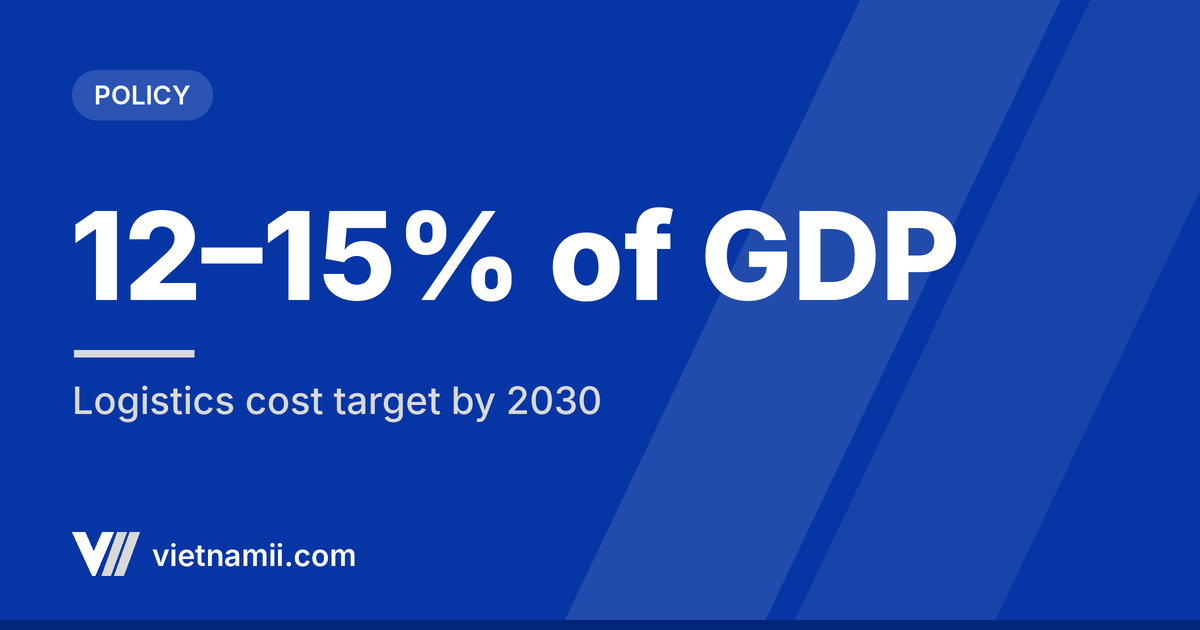
According to figures presented at the forum, the logistics sector is forecast to grow about 14–16% a year in 2026, contributing about 4.5–5% of GDP. Yet Vietnam's logistics costs remain at about 16–17% of GDP, above the global average of about 10–12%. The stated goal is to bring logistics costs down to 12–15% of GDP by 2030.
The foundations are strengthening: in the first ten months of 2026 the country completed 395 km of expressways, including the entire eastern North–South expressway; freight transport rose 15.5% and passenger transport 16.7%. The 2025 freight turnover mix shows sea and inland waterways at 54.82%, road at 41.01%, air at 2.93% and rail at 1.23%.
Tasks with deadlines
- Ministry of Industry and Trade: review and refine logistics policy, focusing on Decree 163/2017/ND-CP; submit to the Prime Minister in December 2026 a plan for a national logistics coordination mechanism led by a government leader, with the ministry as standing agency; resolve transit-goods issues in Q1 2027 and pilot connecting and using a national logistics database in 2027.
- Ministry of Construction: with the trade ministry and localities, review links between seaports, border gates and logistics centres, and identify bottlenecks, resources and schedules in Q1 2027.
- Ministry of Finance: with line ministries, propose single-point specialised inspection at border gates, linked to the ASEAN Customs Transit System, while stepping up post-clearance checks.
- Ministry of Finance and the State Bank: help feasible logistics projects access capital on market principles; the education and home affairs ministries will train logistics workers to market needs.
Opportunities for the Central Highlands and businesses
Gia Lai was chosen as host given the need to move highland goods to seaports. According to Gia Lai Party Secretary Thai Dai Ngoc, the province has over 300 exporting enterprises, its goods reach more than 120 countries and territories, and export turnover exceeds US$3.5 billion a year; projects such as Phu My port and the Quy Nhon – Pleiku expressway are expected to open new transport corridors. As border procedures are streamlined and logistics data connected, exporters, transport, warehousing and industrial-park firms gain fresh momentum to cut costs and shorten delivery times.
Key takeaways
- Logistics costs are about 16–17% of GDP; the target is 12–15% of GDP by 2030.
- A national logistics coordination mechanism is due for submission in December 2026; a national logistics database pilot follows in 2027.
- Decree 163/2017/ND-CP on logistics services will be reviewed and refined.