Why do sprayed vegetables and dirty meat still reach the market?
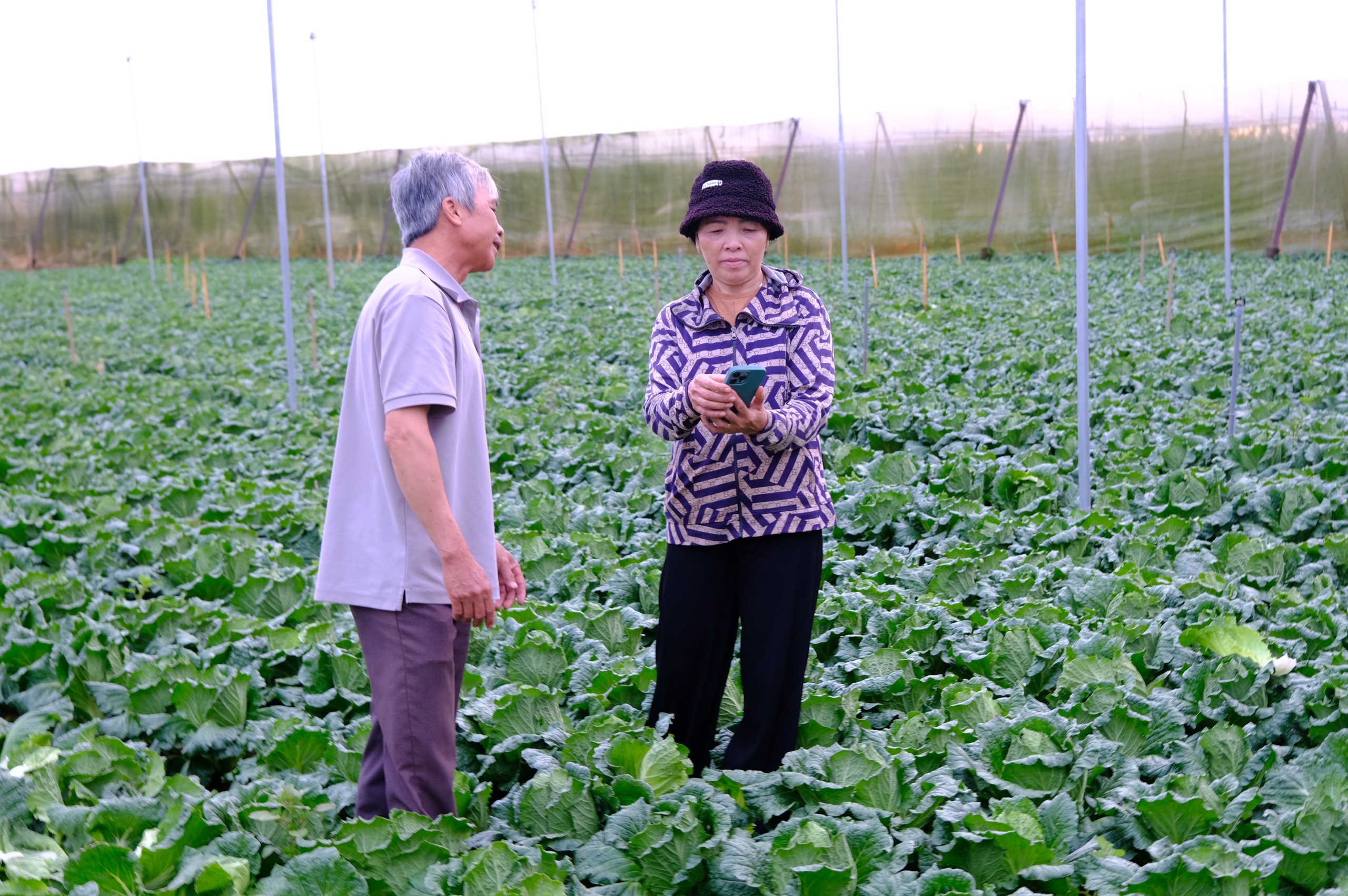
Thanks to models linked with supermarkets, many vegetable farmers in Lam Dong have improved production techniques and applied technology to quality management - Photo: NGUYEN TRI
Talking to Tuoi Tre recently, Ms. Pham Khanh Phong Lan, Director of the Department of Food Safety of Ho Chi Minh City, assessed that the situation of vegetables being grown without pesticides, raising pigs using banned substances, and trading dirty meat still occurs.
Still insecure with dirty vegetables and meat
According to Ms. Pham Khanh Phong Lan, it is very necessary to have additional solutions to control and carefully screen the quality of vegetables, meat, fish... right in the production area, because this helps greatly limit the risk of food insecurity when goods are transferred to the Ho Chi Minh City market.
"If you do not control quality well right at the production area, the quality control stage later will be very difficult but difficult to achieve high efficiency, and even meaningless because you only worry about solving the top part," Ms. Lan assessed.
According to Ms. Lan, recently, Ho Chi Minh City has had many solutions to increase control, of which the highlight is coordinating with many localities to implement the "Safe Food Chain" Project and at the same time deploying cooperation orientation with the Department of Agriculture and Environment of the provinces and cities for the period 2026-2030.
In addition, the unit has issued a document requesting departments, branches, People's Committees of wards, communes, special zones... to promote propaganda and mobilization of production and business units to use ingredients in the "Safe Food Chain" in collective kitchens of schools, industrial parks, and export processing zones.
Meanwhile, talking to Tuoi Tre, a representative of the Ho Chi Minh City Department of Animal Husbandry and Veterinary Medicine said that after 10,000 tons of pork in Dong Nai contaminated with banned substances were discovered and handled, the danger of pigs and chickens contaminated with banned substances and dirty meat is still present.
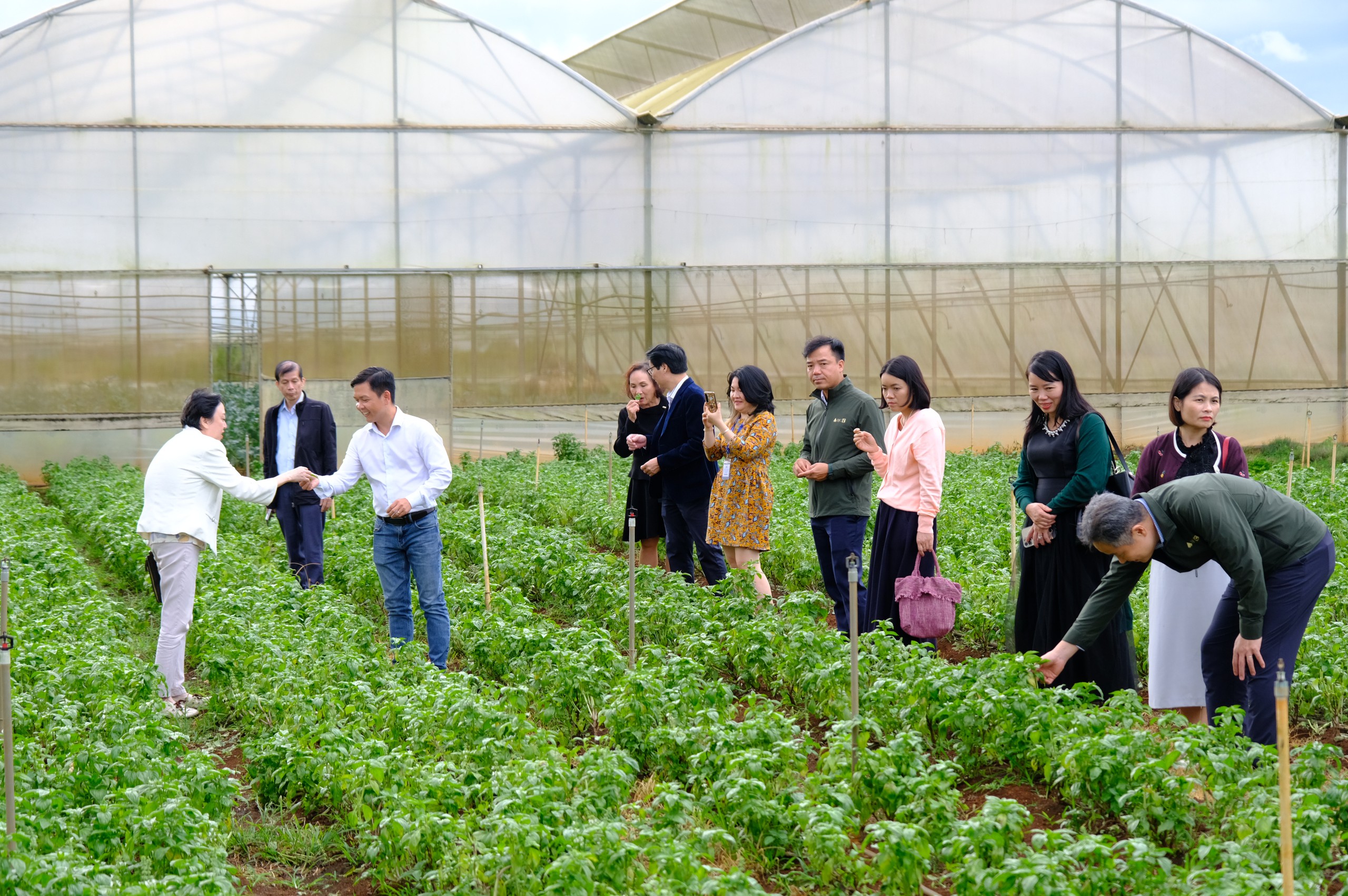
The supermarket regularly organizes working sessions and checks on vegetable growing areas in the linked chain to ensure quality and supply output - Photo: N.TRI
"In particular, in order to optimize profits, many traders choose to gather pigs to provinces and cities for manual slaughter, lacking origin traceability and quality control, which poses many food safety risks. Therefore, the veterinary industry will coordinate with relevant units to strengthen control of gateways into and out of Ho Chi Minh City to promptly detect and prevent dangers," this person said.
Must be controlled from the farm
According to the leader of the Ho Chi Minh City Department of Food Safety, with the majority of the supply of vegetables, meat, fish... for Ho Chi Minh City coming from many provinces and cities, it is not enough for the authorities to control it alone, but more models are needed like "From farm to table" that MM Mega Market supermarket is deploying to farmers in Lam Dong.
"If many of these models are implemented effectively, farmers will follow the production process according to instructions, ensure the quality of goods, and in return, supermarkets will cover output at good prices. Supermarkets will have a stable, quality supply," Ms. Lan affirmed.
Recently, at the program marking MM Mega Market's 20-year journey "From farm to table" in Lam Dong, Mr. Nguyen Duc Toan, General Director of MM Mega Market Vietnam, affirmed that the "From farm to table" strategy is the foundation for businesses to strengthen food safety control throughout the supply chain, from production areas to consumers, especially goods for large markets like Ho Chi Minh City.
According to Mr. Toan, the period 2026 - 2030 will be the next development step of the program through upgrading the purchasing system, expanding the scale of links and enhancing the value of Lam Dong agricultural products.
Expanding this link not only contributes to stabilizing output and increasing income for producers, but also creates conditions to promote the transition from traditional agricultural production to the development of a modern, transparent and sustainable value chain.
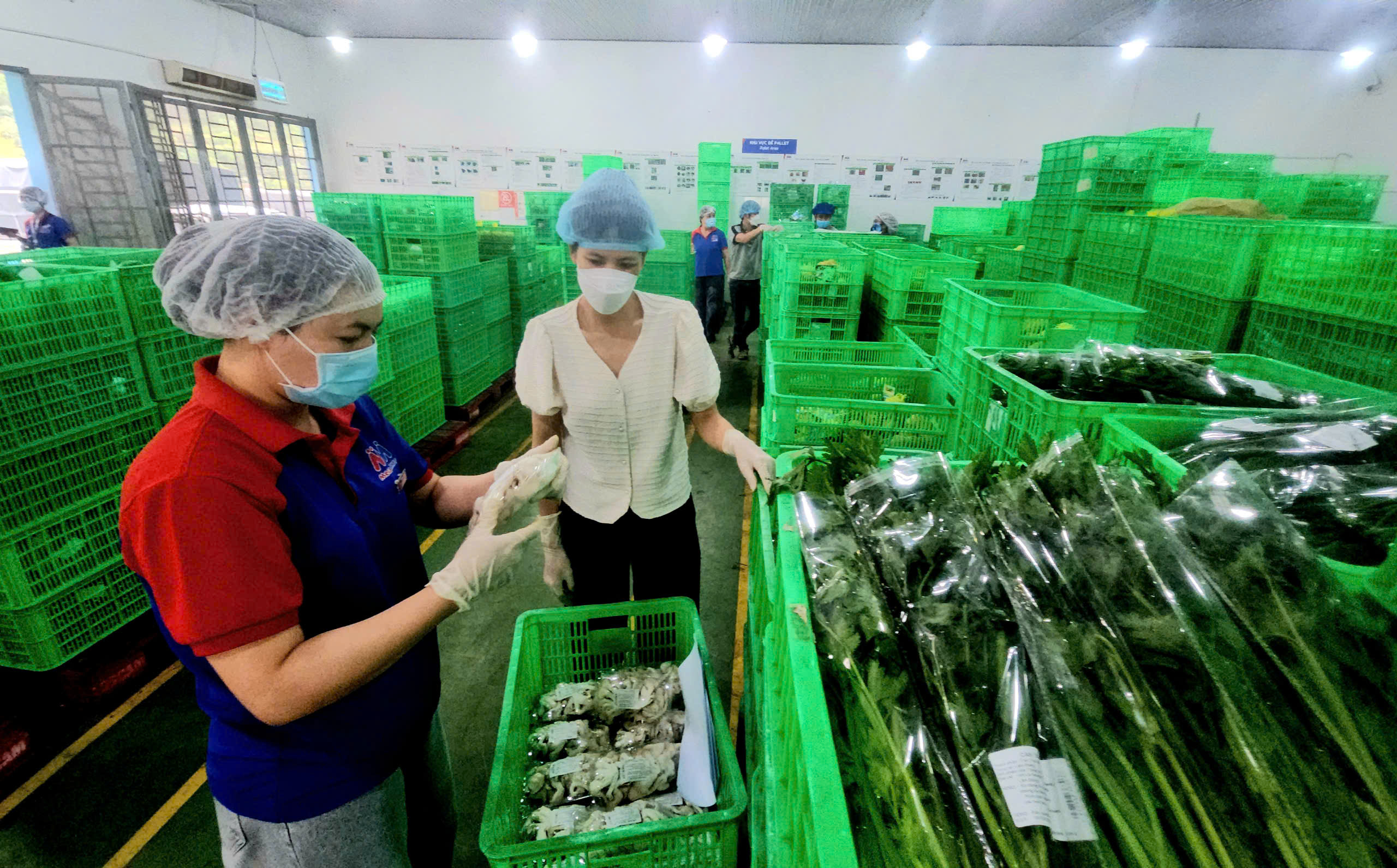
Vegetables are inspected and labeled with traceability labels at MM Mega Market's warehouse in Lam Dong before being brought to the market and supplied to consumers - Photo: N.TRI
Sharing more, Mr. Kim Myungsu, Commercial Director of MM Mega Market Vietnam, emphasized that after nearly 20 years of accompanying Lam Dong farmers, the business has built a network of 52 supply partners, including 8 cooperatives, with a total associated growing area of about 450 hectares. Purchased output reaches about 9,000 tons/year, equivalent to a value of about 165 billion VND.
"The core point of the model lies not only in organizing purchasing but also in the process of accompanying producers, from technical guidance, standardization of farming processes to quality control and market development," Mr. Kim Myungsu emphasized.
According to a representative of the Department of Agriculture and Environment of Lam Dong province, the "Farm to Table" model deployed by MM recently is an effective model that many parties can learn and apply.
Locally, the agricultural industry is and will be implementing many solutions to increase control such as synchronizing the management of growing area codes, promoting traceability to make information transparent from farm to table; Deploying production support policies according to VietGAP standards; Strengthen packaging and preliminary processing capacity...
Leaders of MM Mega Market Vietnam have just announced the strategy for sustainable development of the agricultural supply chain for the period 2026 - 2030. Accordingly, the unit aims to increase purchasing output from 9,000 tons to 15,000 tons/year; Expand the network to 120 farmer partners and cooperatives and develop 1,000 hectares of standard linked growing areas, more than twice the current scale.
 TP.HCM đề xuất kích hoạt đội phản ứng nhanh khi có sự cố an toàn thực phẩm, triển khai trong 2 giờ Đọc tiếp Về trang Chủ đề NGUYỄN TRÍ