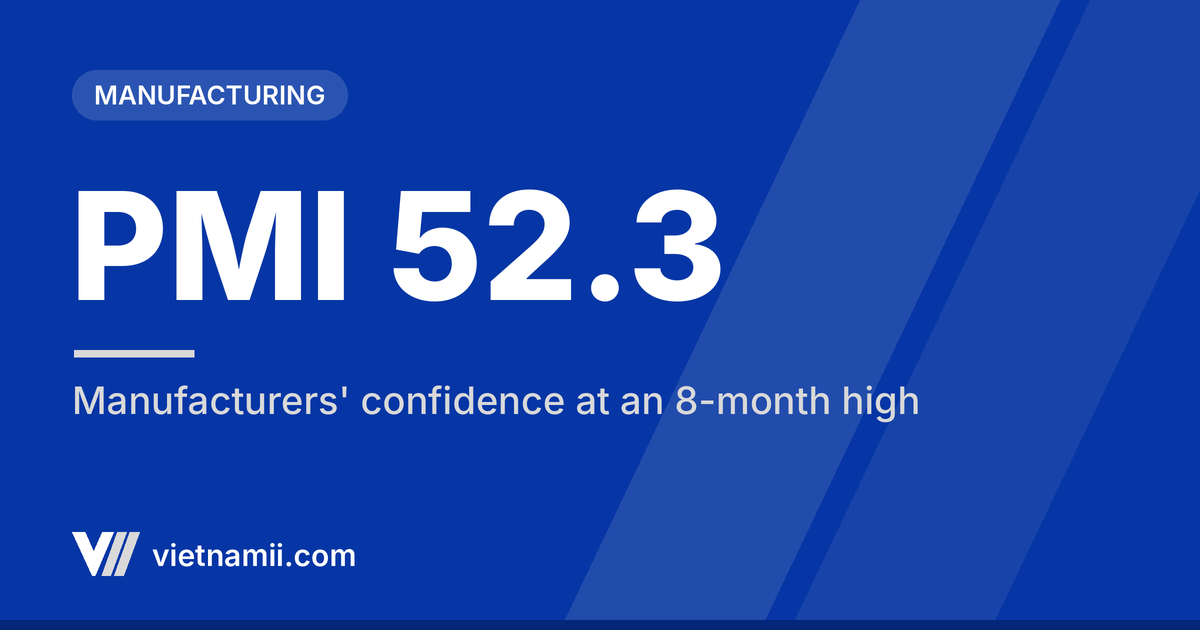
S&P Global's Vietnam Manufacturing Purchasing Managers' Index (PMI) reached 52.3 in October 2026, up from 51.9 in September, which had been a three-month low. A reading above 50 signals improving business conditions, and the sector extended its expansion for another month.
October highlights
- New orders kept rising, the main force keeping output on a growth path.
- Business confidence hit an eight-month high, reflecting expectations of better raw material availability and stronger markets.
- Output still grew, though more slowly, as some firms faced temporary difficulties sourcing materials.
- Input costs rose faster than in September but remained far below the spike seen earlier in the year when oil prices swung sharply.
The full-year picture
Since the start of 2026, Vietnam's PMI has mostly stayed above 50: 52.8 in May, 52.9 in July and 53.3 in August, the highest since February. That steadiness matches industry and construction growth of more than 11% in the first nine months, the fastest since 2015.
Policies supporting manufacturers
- Lower energy costs from 1 November: average power prices down 2% and the petrol excise tax cut to zero, easing the input cost pressure firms reported in the PMI survey.
- The 2% VAT cut for eligible goods and services continues until the end of 2026.
- A 30% reduction in corporate income tax payable for firms with revenue up to VND10 billion in 2026–2027, directly supporting small and medium suppliers.
Impact on Vietnam's economy
The PMI is a leading indicator of industrial production. Its rebound in the first month of Q4 shows factories gearing up for year-end shipments, just when the Government needs Q4 growth of about 12.5% to hit the full-year target. Rising confidence is also a good sign for hiring and expansion in the coming months.
What to watch
Supplier delivery times lengthened the most since April because of fuel costs and bad weather. The petrol tax cut may help. Firms should build inventory buffers and diversify suppliers during the storm season.
vietnamii.com view: the October PMI confirms that manufacturing enters the final quarter on solid ground. With cheaper energy and rising export orders, the outlook for the last months of the year is quite positive.