On 9 November 2026, Deputy Prime Minister Nguyen Van Thang, head of the Price Management Steering Committee, chaired a meeting at Government headquarters, connected online with 34 provinces and cities. The central message was to keep the prices of state-managed goods and services stable through the end of 2026 and to prevent abnormal price swings during the year-end and Lunar New Year (Tet) period.
Inflation under control
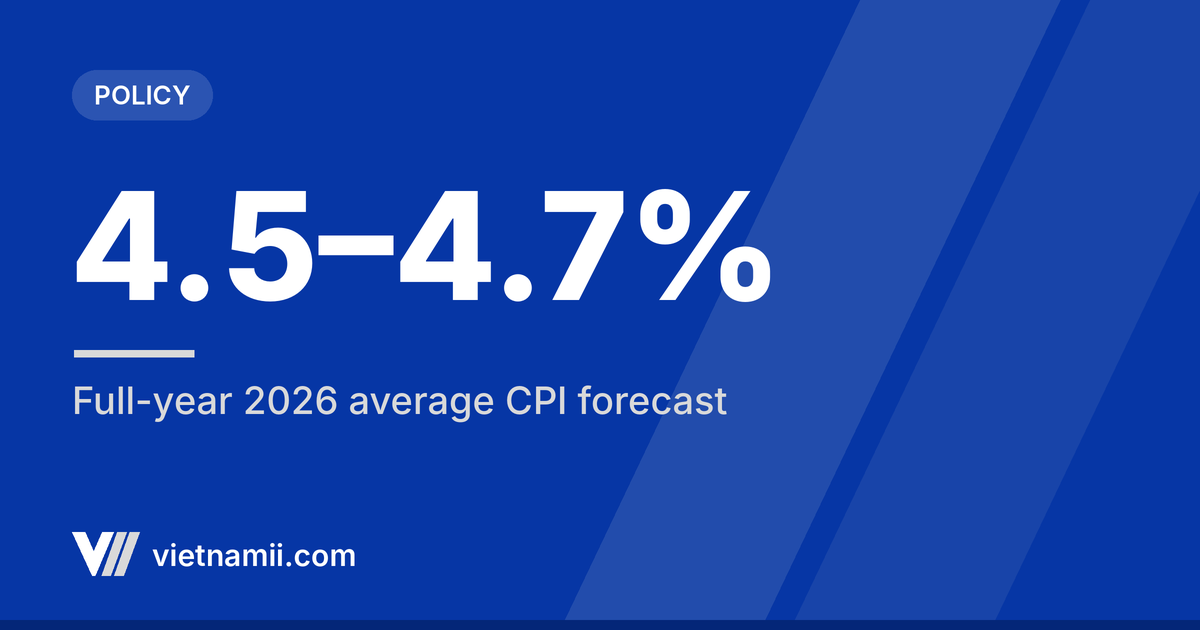
A report presented by Deputy Finance Minister Le Tan Can showed October CPI up 0.2% month on month, driven mainly by domestic fuel prices. On a ten-month average basis, CPI rose 4.57% year on year and core inflation 4.24%. The Ministry of Finance updated its full-year 2026 average CPI forecast to 4.5–4.7%, in line with the State Bank of Vietnam's forecast; international organisations project 4.2–5.5%. Notably, 20 localities kept CPI below the 4.5% target set by the National Assembly.
Several policies have helped ease costs: the average retail electricity price was cut by 2% from 1 November 2026, and the special consumption tax on petrol is set at 0% until 31 March 2027. Social welfare spending in the first ten months reached about VND250 trillion.
Clear tasks for each ministry
- Ministry of Finance: lead coordination, monitor CPI, update scenarios and continue tax, fee and charge relief.
- State Bank of Vietnam: manage monetary policy, keep the exchange rate and credit stable, and limit imported inflation.
- Ministry of Industry and Trade: manage prices of fuel, electricity, coal and LPG, secure energy supply, monitor pass-through of the petrol tax cut and electricity price cut, and prepare goods for Tet.
- The ministries of Agriculture and Environment, Construction, Health, and Education and Training monitor food, construction materials, freight, medicines, medical services, textbooks and tuition; localities step up checks on price declaration and posting.
What it means for businesses and investors
Stable prices for essential items help businesses plan costs for the final quarter, while leaving room for monetary policy to keep supporting growth. A predictable inflation environment is an important foundation for consumer confidence during the year-end shopping season.
Key takeaways
- Prices of state-managed goods and services will be kept stable through end-2026.
- Ten-month average CPI rose 4.57%; the full-year forecast is 4.5–4.7%.
- Lower electricity prices and petrol tax relief continue to support household and business costs.